

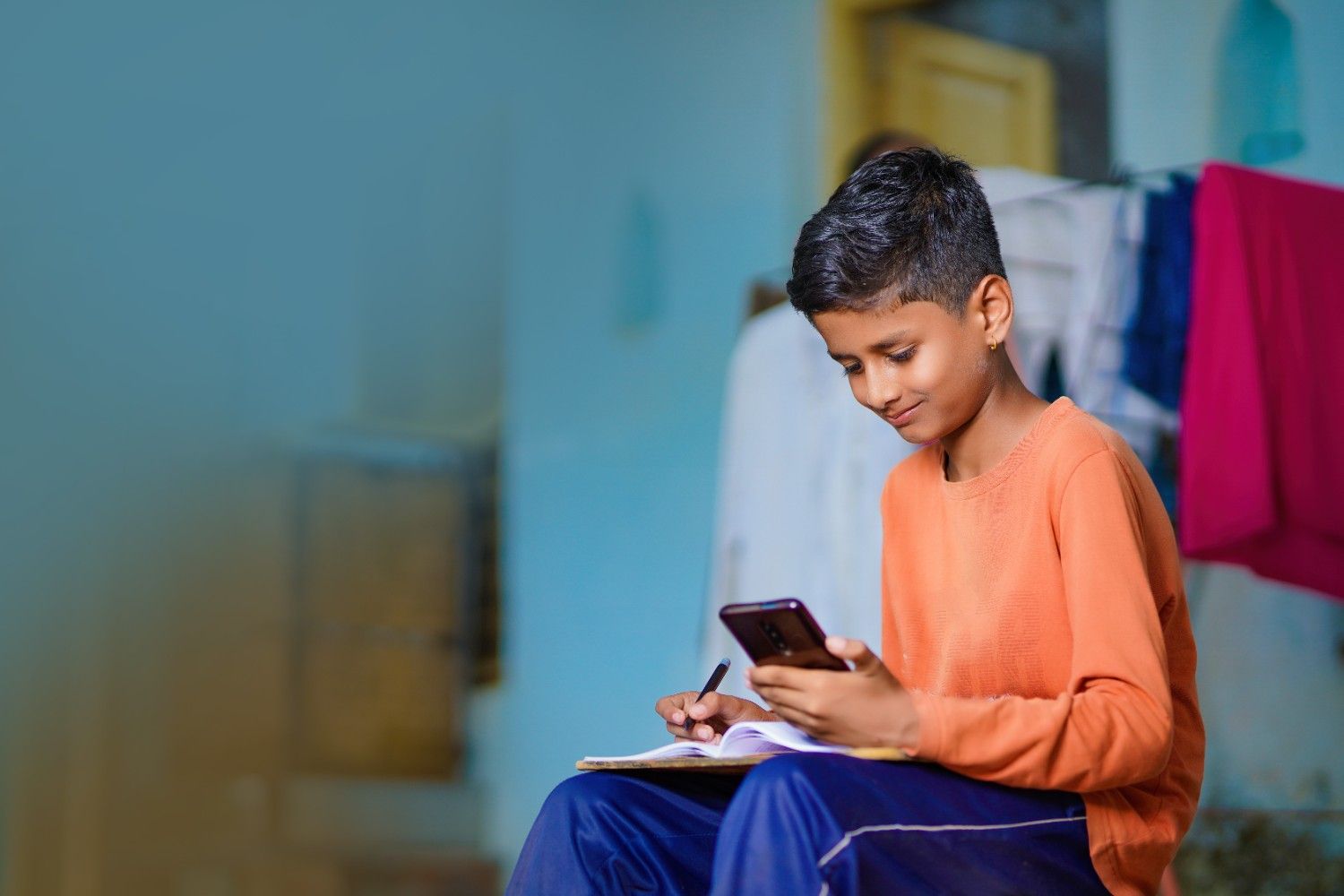
Most parents today find themselves in a situation that would have been difficult to imagine a generation ago. Their child is watching something on a tablet, chatting with friends on a phone, completing a school assignment on a laptop, and asking to play a video game — all within the same afternoon. Managing screen time has become one of the biggest parenting challenges in today’s digital world.
Many parents wonder whether their child is spending too much time on screens. They worry about the effects on attention, sleep, academic performance, physical activity, and even family relationships. At the same time, completely avoiding screens is neither practical nor necessary. Technology is now an important part of education, communication, and everyday life.
The real challenge is finding the right balance. Not all screen time is the same. An hour spent attending an online class is very different from an hour spent scrolling through social media or watching videos. Understanding the difference can help parents make better decisions about their child’s digital habits.
At Surana Vidyalaya, a CBSE school in Chandapura, Bangalore, we work closely with families and see firsthand how screen habits influence learning, concentration, behaviour, and overall well-being. We also understand that every child is different, and there is no one-size-fits-all solution.
In this guide, we explore how much screen time is appropriate for school-age children, the warning signs of excessive screen use, and practical strategies parents can use to encourage healthy and balanced digital habits.
What the Guidelines Say
Several health organisations — including the World Health Organisation and the American Academy of Paediatrics — have published guidance on screen time for children. Their recommendations for school-age children (ages 5 to 17) focus less on a single hard number and more on context and balance.
The general consensus:
- For children aged 2 to 5, screen time should be limited to one hour per day of high-quality content, with a parent ideally watching together.
- For children aged 6 and above, the guidelines suggest consistent limits on recreational screen time — though they stop short of specifying an exact daily number — with the emphasis on ensuring screens do not displace sleep, physical activity, homework, or face-to-face interaction.
- Screen-free time before bed — at least one hour — is consistently recommended across all guidelines, given the well-documented effect of screens on sleep quality.
In practical terms, many paediatricians and child development experts suggest keeping recreational screen time to one to two hours per day for primary school children, and no more than two to three hours for older children in secondary school, excluding time spent on schoolwork.
However, these numbers are starting points, not rules that apply identically to every child. A child who spends two hours watching educational documentaries is in a very different situation from one spending the same time on social media or fast-paced gaming. The content matters as much as the duration
Not All Screen Time Is the Same
Before worrying about minutes and hours, it helps to think about what your child is actually doing on a screen. Screen use broadly falls into a few categories:
Educational and creative use: This includes online learning platforms, reading e-books, coding programmes, drawing or music-making apps, and video content that teaches something. This kind of use is generally positive and can support school learning when used alongside other activities.
Passive consumption: Watching videos, streaming shows, and scrolling through short clips with little interaction. This is not necessarily harmful in moderate amounts, but it is the type most associated with overuse, because it is designed to keep children watching indefinitely.
Interactive and social use: Video calls with family, messaging with friends, and collaborative online games. This can support social connection but also carries risks around peer pressure, comparison, and exposure to inappropriate content, particularly for older children.
Gaming: Can develop problem-solving, hand-eye coordination, and even teamwork when played in moderation. But it is also the category most associated with compulsive use, sleep disruption, and mood changes when the session ends.
When thinking about your child’s screen use, consider the balance across these categories — not just the total hours.
What Parents Can Do at Home
You do not need to wait for the school to act. Several changes at home can meaningfully improve your child’s ability to focus at school.
Set a consistent sleep routine
Establish a fixed bedtime that gives your child at least 9 to 10 hours of sleep. Reduce screen use at least one hour before bed.
Ensure a healthy breakfast
A meal that includes eggs, whole grains, fruit, or dairy before school can help maintain energy and concentration through the morning.
Limit recreational screen time
Keep daily recreational screen time to one or two hours for school-age children. This is not a punishment — it is a practical way to protect their attention capacity.
Create a calm study space
A quiet, well-lit area without a television or phone in the background helps children complete homework with better focus.
Check in about their emotional wellbeing
Ask open-ended questions about their school day — not just about marks, but about how they felt, what they enjoyed, and whether anything bothered them. Children often disclose what is troubling them when the conversation feels safe and unhurried.
Get vision and hearing checked
If you have not done so recently, a routine check with an eye specialist and an ENT doctor is a simple first step before looking at other causes.
Signs That Screen Use Is Becoming a Problem
The question parents most often ask is not ‘how many hours?’ but ‘how do I know when it is too much?’ Here are signs worth paying attention to:
Changes in Sleep
A child who is consistently going to bed later because of screens, who has difficulty falling asleep, or who wakes tired most mornings is likely being affected. Sleep deprivation in children affects concentration, memory, mood, and behaviour — all of which show up in school.
Irritability When Screens Are Taken Away
Some resistance when a screen session ends is normal, especially in younger children. But if your child becomes significantly angry, upset, or inconsolable when you ask them to stop — and this happens regularly — it is a sign that the screen has become more central to their emotional regulation than is healthy.
Loss of Interest in Other Activities
Children who previously enjoyed reading, playing outside, drawing, or spending time with family but have gradually lost interest in all of these in favour of screens are showing a pattern worth addressing. The gradual narrowing of interests is one of the earlier warning signs of problematic use.
Difficulty Concentrating at School or During Homework
Heavy screen use — particularly gaming and short-form video — trains the brain to expect rapid changes in stimulation. Classroom learning does not provide this. Children who are heavy screen users sometimes find it harder to stay with a single task for an extended period. Teachers at Surana Vidyalaya sometimes notice that a child’s attention difficulties worsen over particular periods — and conversations with parents often reveal a spike in screen use during the same time.
Declining School Performance
When a child’s grades or quality of work drops without an obvious academic reason, screen use that is displacing study time or sleep is worth considering.
Secrecy Around Device Use
If your child hides what they are watching or doing online, clears their history, or becomes defensive when you ask about their screen activity, it is worth a calm, non-accusatory conversation. Secrecy around screens in school-age children can sometimes indicate exposure to content they know is not appropriate.
Why Screens Affect Children Differently Than Adults
Adults can generally use screens without the same level of disruption to their development because their brains are fully formed. Children and adolescents are in a period of active brain development, particularly in the areas responsible for attention, impulse control, and emotional regulation.
Social media platforms, short-form video apps, and many games are designed using techniques that exploit the brain’s reward system — variable rewards, streaks, likes, and notifications — that make it genuinely difficult to stop. Children’s developing brains are more susceptible to these design patterns than adult brains.
This is not a moral argument against screens. It is a practical reason why limits and structures matter more for children than for adults, and why leaving a child to self-regulate their screen use entirely — especially before adolescence — rarely works well.
Building Healthy Digital Habits at Home
The most effective approaches are ones that build structure gradually, involve the child in the process, and are applied consistently over time. Heavy-handed restrictions that arrive suddenly tend to create conflict and workarounds rather than genuine behaviour change.
Create a Family Media Plan
Rather than announcing rules, sit down with your child and create a simple plan together. Agree on when screens can be used (for example, after homework and outdoor time), for how long, and which types of content are appropriate. Children who have a say in the plan are far more likely to follow it than those who have rules imposed on them without explanation.
Keep Bedrooms Screen-Free
This single change makes more difference than almost anything else. When devices are charged in a common area of the home overnight, the temptation to use them in bed disappears. Blue light from screens suppresses melatonin and delays sleep onset, and many children who appear to sleep adequate hours are actually lying in bed watching videos or chatting for an hour or two first.
Designate Screen-Free Times
Meals, the hour before bed, and the first 30 minutes after waking are good candidates for screen-free periods. These small blocks of time preserve the habits — conversation, reading, physical activity — that screens most commonly displace.
Model the Behaviour You Want
Children notice when parents are on their phones during dinner, before bed, or during conversations. This is not a guilt point — it is a practical observation. The more consistently parents model limited and purposeful screen use, the more credible the message becomes when they ask the same of their children.
Use Parental Controls as a Support, Not a Substitute
Screen time management tools — built into most devices and routers — are useful for setting automatic limits, especially for younger children. But they work best alongside conversations, not instead of them. A child who understands why limits exist is better positioned than one who is simply blocked and looks for workarounds.
Protect Physical Activity and Unstructured Play
One of the clearest findings in child development research is that physical activity, outdoor time, and unstructured play are not optional extras — they are essential for healthy brain development, emotional regulation, and social skills. When screens displace these activities, the cost goes beyond screen time itself. Protecting time for physical activity and free play gives children natural alternatives to screens.
Keep Communication Open
Rather than monitoring screens silently and reacting when you discover something, make digital life a regular topic of conversation. Ask what your child is watching, who they are talking to online, what games they enjoy and why. Children who feel comfortable talking to parents about their online lives are more likely to come to them when something goes wrong.
A Note on Screens and School Performance
Schools in India, including CBSE-affiliated schools like Surana Vidyalaya, have seen a notable shift in the years following the pandemic, when online learning became unavoidable. Screen use increased significantly, and for many children, the boundary between educational and recreational screen use blurred considerably.
Some effects of high recreational screen use that we see show up in school:
- Shorter attention spans during classroom sessions.
- Reduced reading stamina — difficulty staying with longer texts.
- Poorer handwriting and fine motor skills in younger children who spend more time swiping than writing.
- Social difficulties in some children who are more comfortable communicating through screens than face to face.
These are not irreversible. Most children respond well when screen habits change and are given consistent time for reading, physical activity, and in-person interaction. But the connection between screen habits at home and learning outcomes at school is real enough that we regularly raise it with parents during interactions.
Frequently Asked Questions
1 How much screen time is recommended for school-age children?
There is no fixed rule for every child. The goal is to balance screen use with sleep, physical activity, studies, family time, and other healthy activities.
2 Does screen time for schoolwork count?
Educational screen use is different from recreational screen time. However, parents should still monitor total screen exposure and encourage regular breaks.
3 Can too much screen time affect my child's learning?
Yes. Excessive screen use can affect concentration, sleep, academic performance, and overall well-being if not managed properly.
4 How can I reduce my child's screen time without arguments?
Set clear family rules, create screen-free times during the day, encourage outdoor activities, and lead by example with your own screen habits.
5 Do screens affect a child's sleep?
Yes. Using screens before bedtime can make it harder for children to fall asleep and get quality rest. It is best to avoid screens at least one hour before bedtime.
6 How does Surana Vidyalaya promote healthy digital habits?
At Surana Vidyalaya, we encourage a balanced approach to technology by combining digital learning with classroom interaction, physical activities, and student well-being programmes. We also work closely with parents to support healthy screen habits at home.
Conclusion
There is no single answer to how much screen time is too much. It depends on the child’s age, what they are using screens for, how it fits into the rest of their day, and whether it is getting in the way of sleep, activity, relationships, or learning.
What is clear is that screen use in children works best with intention and structure. Left entirely unmanaged, most children — and many adults — will use screens more than is good for them, because the technology is designed to be compelling. Building limits, modelling balance, keeping communication open, and staying curious about your child’s digital life are the practical foundations of healthy screen habits.
If you notice that your child’s screen use is affecting their attention, sleep, or school performance, start with small, consistent changes rather than sudden restrictions. And if you feel you need support or guidance, the teachers and staff at Surana Vidyalaya are always available to talk through what you are seeing and how we can help together.